• About

Grayfeathersblog

~ Diabetes, Cancer Fighter, Father of Twins, Kayak Fishing, Lover of Life

Grayfeathersblog

Category Archives: Leukemia

My Hobbies Are Cheaper Than Therapy (Mostly)

05 Thursday Mar 2026

Posted by Tim Hughes Living with CML in Amateur Radio, Cancer, Depression, Fishing, Kayaking, Leukemia, Life, Nature, Uncategorized, Woodworking

≈ Leave a comment

Tags

books, escape, Fishing, hands on, health, Hobbies, Kindle, Life, Mental, mental-health, Nature, Reading, Stress, traveling, Woodworking, writing

Let’s talk about hobbies.

Hobbies can serve many purposes. AI summarizes them as follows:

  • Provide relaxation and stress relief from daily pressures
  • Foster creativity and self-expression through various activities
  • Enhance skills and knowledge in specific areas of interest
  • Promote social connections and friendships with like-minded individuals
  • Improve mental health and overall well-being through enjoyable pursuits
  • Offer a sense of accomplishment and personal fulfillment

I’ll have to agree with most of these, but a couple stand out more than others for me. The ones that stand out the most are relaxation, creativity, self-expression, and mental health. Most importantly, mental health.

I’ll be the first to admit, and my wife would be the first to agree, that I have way too many hobbies. A short list would include fishing (of course), reading, woodworking, Amateur Radio, camping, and cooking. If I’m being completely honest, the list is probably a little longer than that, but I’ll stop there before my wife reads this and starts counting.

I’m not someone who enjoys just sitting around the house. I have to be doing something. I love the outdoors and enjoy most anything that takes me outside, whether it’s camping or traveling somewhere just for the day. Sitting still for too long makes me feel like something must be broken… or worse, that someone is about to hand me a chore.

I’ve always been good with my hands, and I enjoy making things out of wood or repairing things that need fixing. When I was a kid, I used to get into trouble because I was always taking things apart just to see how they worked. The only problem was that I wasn’t always successful at putting them back together. Apparently, parents don’t appreciate curiosity when it involves their appliances.

On rainy days, I like to curl up with a good book that allows my mind to travel to places I may never be able to visit. Reading also helps take my mind off the stresses of the day.

I know without a shadow of a doubt that people are reading this who have far greater health concerns than I do. But regardless of your health, you may have had a bad day at work, an argument with your spouse, or just received a bill you know you can’t pay. Each of us faces stress in our lives that can be difficult to deal with.

Because of that, each of us needs to find some sort of escape—a place where we can go, even if it’s only for a short time, to gather our thoughts. Sometimes, that time allows us to find a way to deal with the situation at hand. Other times, it helps us realize we need to talk with someone who can help us sort things out.

As an outsider, I can’t tell you what to do. I can only offer suggestions about what works for me.

When I find myself in a situation where I know I’m going to be stressed, I grab my Kindle and start reading. Before I knew it, my mind had drifted away from whatever was bothering me. For example, the wreck I had the other day has been stressing me out more than it probably should. There’s nothing I can do right now but wait for the police report to be submitted. Unfortunately, patience has never been one of my stronger qualities.

But when I picked up my Kindle and started reading, before long my mind was somewhere else entirely—and not thinking about insurance adjusters, body shops, or police reports.

I also have the unfortunate routine of visiting the doctor for lab work or appointments at least three times a month—sometimes more. This week alone, I had three appointments, and the month has just started. At this point, I’m starting to feel like the waiting room staff should just give me my own assigned chair.

Thankfully, I enjoy reading. Last year, I read 45 books, and quite a few of them were finished while waiting for a doctor to call my name. I also read quite a bit before going to bed. It helps me relax and takes away some of the stress from the day.

Another hobby I’ve written about before is fishing. Of course, I enjoy catching fish when I go, but honestly, that’s only part of it. What I enjoy most is the solitude. Being out there gives me time to think without distractions.

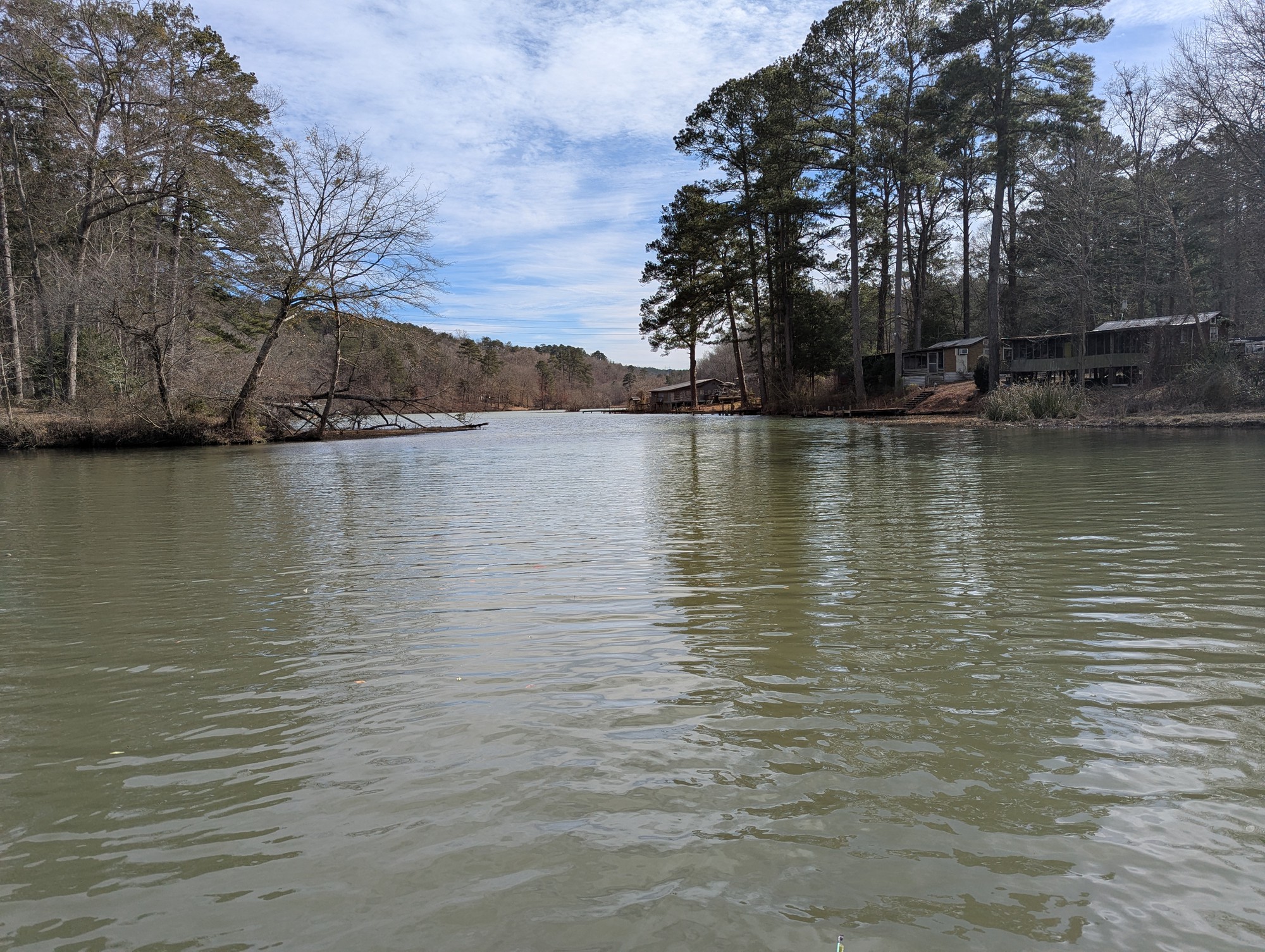
Sometimes I’ll paddle out to the middle of the river, set the paddle down, and just listen to the birds and the other sounds of nature. Every once in a while, a fish even cooperates and jumps on the hook just to make the trip look productive.

To me, that’s more relaxing than just about anything else I’ve found.

Most of the time, I come home from a fishing trip in a better mood—whether I catch anything or not. Of course, catching something does make the ride home a little sweeter. It also helps justify all the fishing gear I’ve somehow managed to accumulate over the years.

I guess what this post really boils down to is this:

Find your happy place.

Find a place where you can go—either physically or mentally—to relax and get away from it all. Only you will know where that place is.

Stress has a way of dragging us down, sometimes to a place where it becomes very difficult to climb back out. I’ve been there, and I know what it feels like.

Luckily, I was able to find my place and climb my way back before the stress got to a point where I couldn’t.

And that’s why hobbies matter more than most people realize.

When the Calendar Attacks

02 Monday Mar 2026

Posted by Tim Hughes Living with CML in Diabetic, Disability, Fishing, Kayaking, Leukemia, Life, Nature, Uncategorized

≈ 1 Comment

Tags

Calendar, Doctor Apptointments, Family, Friendship, health, Lab Work, Life, love, technician, writing

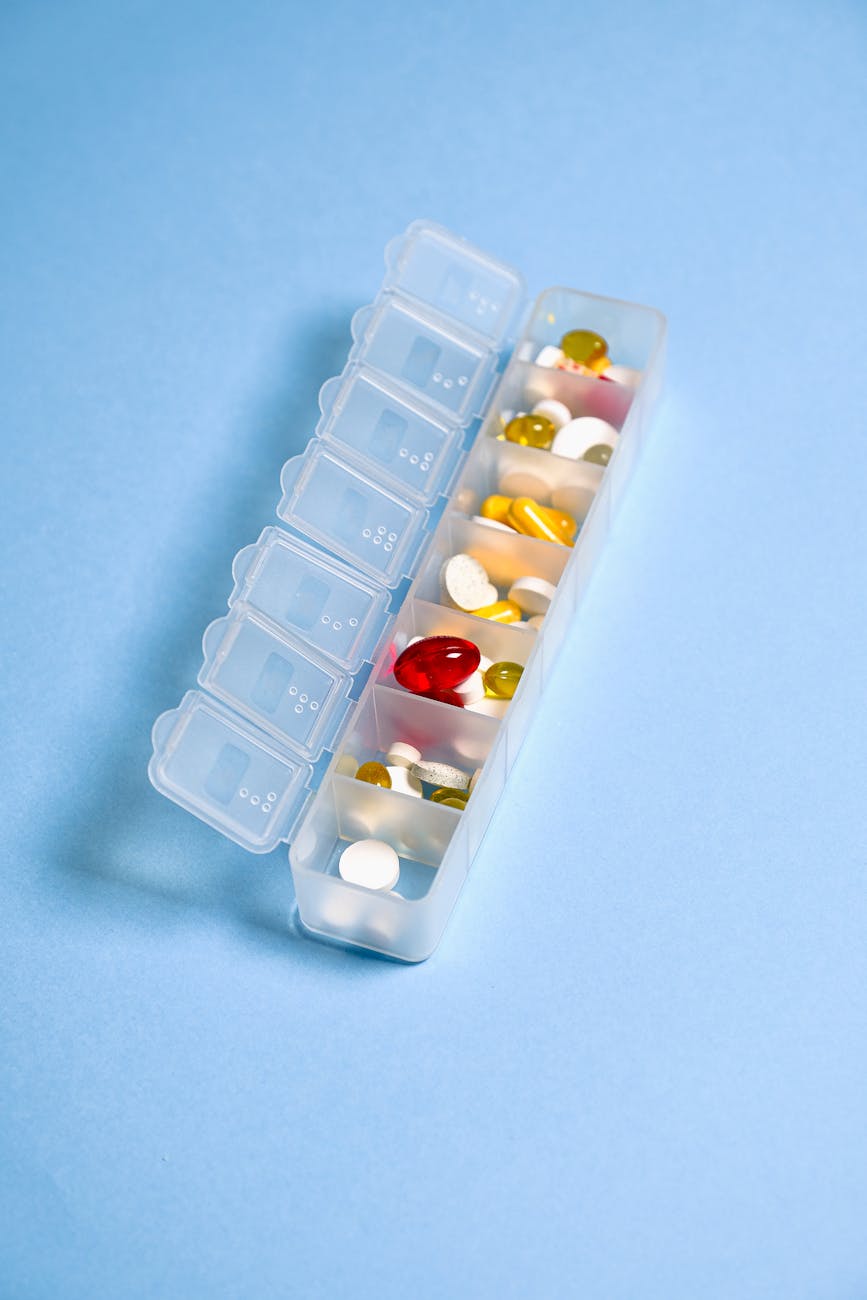
Photo by Yan Krukau on Pexels.com

Today has been one of those days. You know the kind. The kind where your calendar looks like it’s been attacked with a highlighter and your patience is hanging by a thread that was probably manufactured in the late 1800s.

The morning started with what should have been a routine lab appointment. Twelve hours of fasting. No coffee. No toast. No nothing. Just me and my growling stomach driving to the doctor’s office, already dreaming about bacon.

Only to be told the lab technician had a death in the family and I needed to drive to another location across town.

Forty-five minutes later, I finally gave blood. At that point I was pretty sure they could have just followed me around with a butterfly net and collected it from pure frustration.

I got home with just enough time to inhale what should have been breakfast but was technically lunch by then. If eating at warp speed becomes an Olympic sport, I’ll medal. I’m convinced my digestive system now files weekly complaints.

Meanwhile, I’d already been informed that I would be taking my wife to her doctor’s appointment later in the day—which meant I’d likely be late for my 5 p.m. meeting.

Now let me clarify something.

I volunteered to take her.

But my wife doesn’t drive. Well… she technically can. She just won’t drive on the interstate anymore. She avoids it like it’s under federal investigation. She will happily add thirty minutes to a trip just to stay on back roads. Riding with her feels like being chauffeured by a very nervous 16-year-old taking her first driver’s test.

I love her dearly. I also consider Uber a spiritual gift.

We arrived early for her 2 p.m. appointment, secretly hoping they might see her ahead of schedule. That optimism faded around 3 p.m. when she was finally called back. My meeting requires me to leave the house by 4 p.m.

At 3:45 she came out—with a nurse. I stood up, hopeful.

“Nope,” she said. “One more procedure.”

Of course.

She finally emerged again, apologizing because she knew I’d be late. It’s hard to be frustrated at someone who genuinely feels bad, especially when you know she can’t help it.

I dropped her off, drove to my meeting, and arrived thirty minutes late… only to discover the group had been deep in an off-topic rabbit trail discussion. For once in my life, being late worked in my favor.

The rest of the week doesn’t look much better. Meetings. Doctor appointments. Obligations stacked like cordwood. Meanwhile, I have a craft fair this Saturday and hardly any time to finish the projects I planned to sell. It’s looking more and more like I’ll be burning the midnight oil just to have something on the table besides a smile and a price tag.

And then there’s my fishing buddy.

I enjoy his friendship. I truly do. But I think I may be his primary source of entertainment. His wife works. He doesn’t drive outside of town. So most days he’s in his recliner watching television. Tuesday breakfasts are the highlight of his week unless we fish or wander around the tackle shop.

Now that the weather is warming up, the question has already started:

“So… when are we going fishing?”

I love fishing. I really do. But I’m not wired to sit in a recliner all day waiting for someone to rescue me from boredom. I’ve got crafts to make. Bible studies to attend. Appointments to keep. Responsibilities that don’t pause just because the fish are biting.

Having a medical condition that requires lab work or weekly-to-monthly doctor visits can be increasingly challenging. The physical part is one thing. The mental part is another. Sitting in waiting rooms gives your mind far too much freedom to wander into the land of “What will the doctor find this week?”

If I could offer one small suggestion to anyone walking that road, it would be this: bring a book. Or in my case, a Kindle. Reading helps me escape the mental spiral. It shifts my focus away from lab numbers and test results and places it somewhere far more peaceful. If you let it, the stress will take over. And some weeks—like this one—it tries really hard.

Truthfully, this post is simply me letting off a little steam. Sometimes writing it out is the healthiest thing I can do. It helps me process the frustration, the schedule overload, the internal pressure to be everywhere at once for everyone.

Some weeks feel balanced. Others feel like the walls are inching closer.

This is one of those weeks.

But I also know this: weeks like this pass. Meetings end. Appointments get checked off. Craft fairs come and go. Even fishing trips can wait.

For now, I’ll take a deep breath, set the alarm a little earlier, probably stay up a little later, and remind myself that hectic seasons don’t last forever.

And maybe next week… I’ll go fishing.

Insurance Knows Best… Supposedly

25 Wednesday Feb 2026

Posted by Tim Hughes Living with CML in Cancer, Diabetic, Disability, Family, Leukemia, Life, Photography, Retirement, Uncategorized

≈ 2 Comments

Tags

co-pay, cost, Diagnoses, Doctors, Drugs, health, health-insurance, healthcare, Insurance, Medicare, Medication, Pharmacy, prescriptions, rejection, research

Doctor Says Yes… Insurance Says “We’ll Think About It”

Photo by Anna Shvets on Pexels.com

Doctors, diagnoses, prescriptions, Medicare, insurance, and denial — those are words that seem to follow me around these days. Sometimes I think dealing with the medical system is almost a full-time job. If they paid by the appointment, I’d be drawing a salary by now.

One thing I’ve never quite understood is how a doctor can go to school for years, train for years more, examine you personally, and decide what medication you need — only for the insurance company to step in and say, “Nope, we don’t think so.”

Apparently, somewhere a person is sitting behind a desk who knows more about my condition than the doctor who actually saw me.

I worked for a health insurance company for 32 years before I retired. I was in the maintenance department, which meant I fixed things like doors and lights — not insurance claims. Still, people who knew where I worked would often ask me why their medication was denied even though their doctor prescribed it.

I always had to explain that just because I worked there didn’t mean I knew anything about insurance decisions.

Truth be told, I still don’t.

A good example is what happened recently with my son. He was prescribed medication for severe sleep deprivation. His previous insurance covered it, and he was happy because they had finally found something that actually worked.

Then he changed jobs.

His new insurance company now says the medication is “not medically necessary.” I guess sleeping is optional now.

The doctors now think he might have sleep apnea and ordered a sleep study. Before he even got scheduled, he got a phone call saying the test would cost over $2,000 because his insurance wouldn’t cover it.

He’s a young man with a mortgage, a car payment, and utility bills. In other words, he’s living in the real world — the one where people don’t just have $2,000 laying around for a test that might help them sleep at night.

Meanwhile, I realize I’m one of the fortunate ones. Because of my disabilities, I qualify for Medicare, and because I worked for an insurance company, I retired with a good supplemental plan. That combination gives me coverage that many people would love to have.

I don’t pay co-pays for doctor visits. I don’t pay for emergency room visits. Every time I leave the hospital, the bill says I owe exactly zero dollars, which is my favorite number.

I do pay for some medications, but not a lot.

One medication I take costs about $20,000 for a 30-day supply.

Yes, twenty thousand dollars.

For that price, I feel like it ought to come with a steak dinner and a weekend vacation.

Fortunately, the drug company offers a $0 co-pay card because they know insurance only pays part of the cost. Thanks to that program, I don’t pay a penny for a medication that costs more than some cars.

I consider myself blessed, because there are people who need this same drug and simply can’t get it because they don’t have the right insurance. That part isn’t funny at all.

When I ask why the drug costs so much, I’m told it’s because of all the research that went into developing it. I understand that research costs money, but sometimes I wonder if the scientists also built a few vacation homes along the way.

After being on this medication for a while, I feel like I’ve personally contributed a pretty fair share toward paying for that research — and I know some folks have been on it a lot longer than I have.

I don’t know what the answer is. Doctors are trying to help people. Insurance companies are trying to control costs. Drug companies are trying to recover research money.

And patients are just trying to stay alive without going broke in the process.

Maybe one day there will be a system where if your doctor says you need something, you can actually get it without filling out forms, making phone calls, and saying a small prayer first.

Until then, I guess we’ll just keep taking our prescriptions — and a healthy dose of patience right along with them.

The Number in the Corner

19 Thursday Feb 2026

Posted by Tim Hughes Living with CML in Disability, Family, Leukemia, Life, Retirement, Uncategorized

≈ Leave a comment

Tags

countdown, Employment, Family, first steps, friendships, HVAC, Job, Life, mental-health, Numbers, Retirement, School, Social Security, writing

Photo by Jan van der Wolf on Pexels.com

In 2018, at age 55, I retired after 32 years with the same company.

Five years before that, the company decided to raise the retirement age from 55 to 65 with 25 years of service. Thankfully, I had already met the age requirement. I was “grandfathered in.”

That phrase never sounded so beautiful. I’d never been so proud to qualify for something simply because I was already old enough.

Ordinarily, I would’ve stayed until 65, so I wouldn’t mess with my Social Security. That was the responsible plan. But my body started holding meetings without my permission. Knees voting “no.” Back filing complaints. Balance requesting reassignment.

You can’t very well do HVAC work if climbing a ladder feels like you’re auditioning for a slow-motion fall.

I turned 55 on August 15, 2018. When I realized I had 42 months until I could retire, I started a quiet countdown.

Every morning, I took readings on the plant’s main HVAC equipment. On the wall was a massive 6 x 4 dry-erase board where I logged the numbers. Up in the far-left corner, I wrote one simple number:

42

On every 15th of the month, I erased it and lowered it by one.

Forty-two.
Forty-one.
Forty.

For three and a half years, that number sat there. No one ever asked what it meant. Not one person.

Either they didn’t notice… or they were silently rooting for it to hit zero.

I started that job on January 26, 1986. It was 19 degrees that morning. I know because my previous job was washing freshly painted utility trucks — outside — in January.

Whoever was lowest on the totem pole got that job.

I wasn’t just on the totem pole.

I was holding it up.

So when I walked into a heated building that morning, I felt like I’d been promoted to royalty.

I even took a two-dollar-an-hour pay cut to take the job. Two dollars an hour back then was real money. But I believed long-term it would pay off.

When I first started, I didn’t have any college education. Just a high school diploma and a willingness to work. But I kept getting passed over for promotions. One supervisor finally told me straight: “You’ll keep getting passed over unless you go back to school.”

That was hard to hear — but it was true.

An HVAC supervisor came to me and said that if I went back to school and learned the trade, he’d help me every step of the way. And he did.

So I worked full-time and went to school at night.

Those were long years.

I missed some things.

My son’s first baby steps were taken one night while I was sitting in a classroom trying to understand airflow calculations. I didn’t see them in person. I heard about them when I got home.

That part still stings a little.

You tell yourself you’re doing it for your family — and you are — but sometimes providing for them means missing moments you can’t ever get back.

I learned HVAC systems.

I just wish I’d learned how to be in two places at once.

For 32 years, I gave that place blood, sweat, and a few tears they probably didn’t log on the dry-erase board. I worked alongside some of the smartest people I’ve ever known. We solved problems together. Ate lunch together. Complained quietly together.

I went to their kids’ birthday parties. Camped with some of them. Attended funerals for their family members.

We weren’t just coworkers.

We were everyday life.

And then one day, I walked out.

Retirement is strange.

One day, you’re the guy everybody calls when something breaks.

The next day… nothing breaks that requires your number.

At first, I kept my phone close. Surely someone would need advice. Surely they’d call and say, “We can’t find this,” or “What did you do about that?”

Turns out, they figured it out.

Rude.

Before COVID, I’d stop in and have lunch with some of them. Now I mostly see them on Facebook. I still hear from a couple of guys, but it’s rare.

You work beside someone for 15 years and assume that bond is permanent. But when the daily routine disappears, you realize proximity and permanence aren’t the same thing.

I suppose I could call them. But they’re working. And when they’re home, they need family time.

And I’m retired.

Which means I now have plenty of time to think about things like dry-erase boards, 19-degree mornings, and baby steps I heard about instead of saw.

That number in the corner wasn’t just a countdown to retirement.

It was a countdown to a new season.

For 32 years, I was “the HVAC guy.” The steady one. The one who knew where everything was and how everything worked.

Now I’m the guy who drinks coffee in the morning without a time clock waiting on me.

And you know what?

That’s not a bad promotion.

I’m grateful.

Grateful for heated buildings on cold mornings.
Grateful for supervisors who pushed me.
Grateful I got to leave on my terms.

And grateful that even though I missed a few first steps…

I didn’t miss the rest of the journey.

When that number finally reached zero—

I erased it.

And walked out the door.

On my own two slightly creaky, but still standing, legs.

Kayak, Quiet, and Keeping It Together; Out There, I Found Myself Again

11 Wednesday Feb 2026

Posted by Tim Hughes Living with CML in Cancer, Depression, Fishing, Kayaking, Leukemia, Life, Nature, Uncategorized

≈ 2 Comments

Tags

Cancer, Cell Service, Communication, Depression, Diabetes, Dialysis, Fishing, Garmin Mini InReach, GPS, health, kayak, Kayaking, kidney failure, Leukemia, Life, love, mental-health, Nature, religious, satellite, solitude, writing

My fishing buddy texted me Monday night asking if we were still meeting for breakfast Tuesday morning—a morning ritual we started a few months back. For the second time in two weeks, I had to tell him no because of doctor appointments. I worry that he thinks I’m brushing him off, but honestly, that’s not the case at all.

We’re both at an age—and health status—where we really shouldn’t go fishing alone. He’s 72 and has had five strokes. Thankfully, his health has improved a great deal, and I’m not overly worried about the two of us being out in an area with no cell service for hours on end. I carry a Mini InReach, a satellite communicator that allows me to send and receive text messages via satellite if things go sideways and help is needed. It even has an SOS button. If either of us were to have a medical emergency, pressing that button would send our GPS coordinates to rescuers. It might take a few hours, but help would be on the way.

I’m 62, and if you’ve read any of my posts, you already know I have my own long list of health concerns. Having a partner with you in a place where two-way communication is sketchy isn’t just a good idea—it’s warranted.

But it comes at a cost.

Sometimes, I need to be alone. I enjoy getting out in my kayak, stopping for a while, and just absorbing the sounds of nature. It’s where I have one-on-one time with my God. Rick is always nearby, as he should be, but I no longer feel like I truly get that quiet space. If I slow down to let him get ahead, he stops too, probably just to make sure nothing’s wrong.

When I first started kayak fishing, I went alone. Rick didn’t have a kayak then. Back then, my world felt like it was closing in on me. My cancer numbers were out of control, my kidneys were failing, and dialysis felt like the only road left in front of me. I was depressed, scared, and felt more lost than I ever had in my life.

Being out in the middle of nowhere—surrounded by silence, by peace, by the kind of beauty only God could create—gave me something I couldn’t find anywhere else. It gave me room to breathe. It gave me space to think. It gave me a place where I could be honest about how scared I really was. Sometimes it didn’t fix anything… but sometimes it gave me just enough strength to get through one more day.

I needed that time alone. It wasn’t about fishing. It wasn’t about getting away from people. It was survival. It was the only place where I felt I could truly talk to God and not feel like I had to be strong for anyone else.

This isn’t meant to be a religious post. I don’t use this platform for politics, religion, or controversy. This is simply how I dealt with a situation that felt completely out of my control.

I hope each of us has a place we can go—a place of solitude, reflection, prayer, or even just quiet—where we can catch our breath when life feels too heavy.

And I want to ask something, not as a writer, not as someone posting on social media, but as someone who knows what it feels like to be overwhelmed:

How do you deal with depression?
When you feel like things are getting out of control, how do you hold on?
What helps you get through the days when everything feels heavier than it should?

Because the truth is… someone reading this right now might be barely holding on.
Someone might be smiling on the outside and falling apart on the inside.
Someone might just need to know they’re not the only one fighting that battle.

If you have something that helps you keep going, share it.
You might help someone more than you will ever know.

When Your Brain Hits the Snooze Button

09 Monday Feb 2026

Posted by Tim Hughes Living with CML in Cancer, Disability, Leukemia, Life, Pets, Retirement, Uncategorized

≈ Leave a comment

Tags

argument, brain, Brain Fog, Breakfast, Chemotherapy, Devotional, Food, Forgetfulness, health, Meditation, recipe, Recipes, Sleep

Brain fog is working overtime this morning.

My cat got me up earlier than normal, so I started my day the usual way — getting my coffee going and sitting down to do my daily devotional. Afterward, I usually sit in the darkness for a bit to reflect on what I just read and mentally prepare myself for the rest of the day. That normally lasts about 15 to 20 minutes, depending on what I have planned.

Evidently, today I went into a deep sleep while doing so.
So instead of reflecting on scripture, I apparently reflected on the inside of my eyelids.

I got up, went into the kitchen, took a bowl out of the cabinet, and proceeded to pour cereal into it when my wife walked into the kitchen and asked what I was doing. I could only look at her with what I assume was a very strange look on my face — the same look Windows gives right before it crashes.

Normally, when someone is pouring cereal into a bowl, it means they’re about to eat breakfast. So I told her I was fixing breakfast.

She then informed me that I had already eaten breakfast.

A small argument began.

“No, I haven’t,” I replied, with the confidence of a man who clearly has no idea what he’s talking about.

She then pointed to the kitchen sink where an empty bowl with a spoon sat. Next to it was an empty plate with a fork — the same plate where I had apparently made myself a sausage patty earlier.

I honestly don’t remember eating breakfast this morning. But the evidence was sitting right there in the sink like a crime scene I had committed against breakfast foods.

I took the bowl of cereal, poured it back into the cereal box (because groceries are too expensive to waste), and went to sit down — feeling beaten and confused.

It made me wonder… how many times have I done something like this before and not remembered it? I think this was the first time with breakfast. Otherwise, I probably would have noticed empty dishes in the sink and wondered if we had a very polite burglar who only steals memories and leaves dishes.

What I do know is that during conversations, I can forget things right in the middle of saying them, and it’s frustrating. Sure, I know as you get older your brain starts playing games with you, but this feels different.

For as long as I can remember, I’ve done the classic “walk into a room and forget why I’m there” routine. I’ll leave one room, get halfway down the hall, and forget where I was going or what I needed. At this point, I just assume I live in the hallway now.

But lately, it feels… bigger than that.

I’ve also quit arguing with my wife about things that come up missing. I used to accuse her of moving things and not remembering where she put them — when in fact, it was me who moved them and can’t remember doing it. Turns out the call was coming from inside the house… and by house, I mean my brain.

I go back to the doctor on Tuesday, and if I can remember, this will definitely be one of the topics I bring up. I’m not sure if there’s anything they can do, but at least it will be on record.

And maybe — just maybe — tomorrow I’ll only eat breakfast once.

When “Stable” Is a Standing Ovation

30 Friday Jan 2026

Posted by Tim Hughes Living with CML in Cancer, Diabetic, diet, Leukemia, Life, Uncategorized, Weight Loss

≈ 2 Comments

Tags

Diagnosis, Dialysis, Doctor, eGFR, energy, Flood, health, Hemoglobin, Hospital, infusion, Iron, Kidney, kidney disease, kidney failure, Kidneys, Life, Medical, Nepgrologist, Oncologist, wellness

My nephrologist called me the other day to reschedule my appointment. Apparently, the hospital had a flood on the top floor, and their offices were flooded as well. Because when you’re already dealing with kidney issues, why not throw in some surprise indoor rain?

As a result, they had to temporarily move their offices to one of their satellite locations in a nearby city. The day before my appointment, they called again and asked if we could just do a teleconference instead. Same time, same doctor, no driving, and no pants required from the waist down—absolutely.

My lab work had already been done a couple of weeks earlier, and because I like to mentally prepare myself for either good news or emotional damage, I had my results emailed directly to me. Now, I’m not a doctor, and I don’t pretend to understand every number on those reports, but there are a few that I follow very closely.

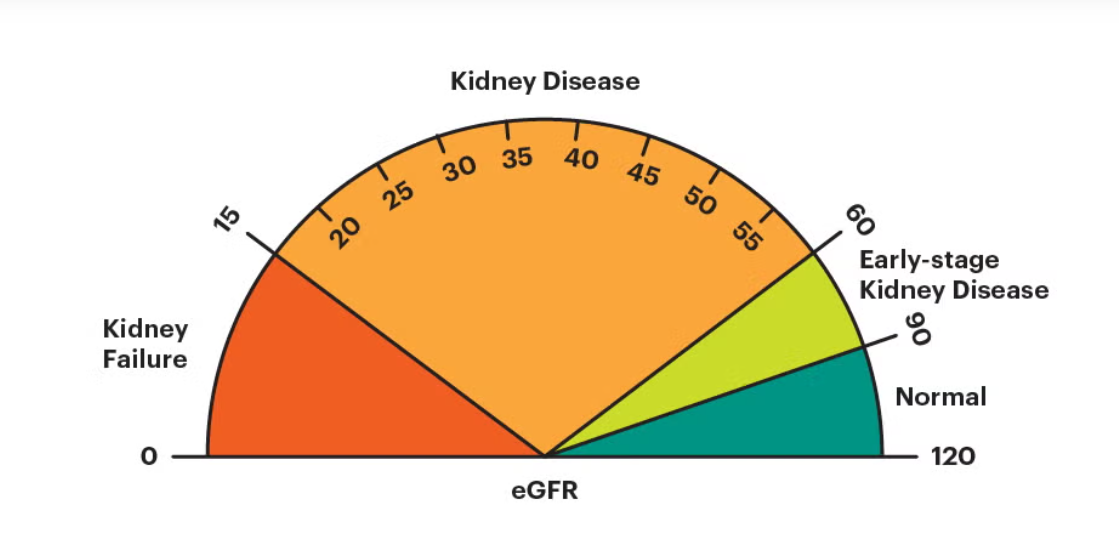
First up is eGFR, or estimated Glomerular Filtration Rate. This number tells you how well your kidneys are filtering your blood. A normal range is between 90 and 120—numbers I personally haven’t seen in a while and would probably frame if they ever showed up again.

  • 60–89 is Stage 2 kidney disease
  • 45–59 is Stage 3a
  • 30–44 is Stage 3b
  • 15–29 is Stage 4
  • Below 15 means kidney failure, and dialysis becomes a very real conversation

Then there’s Creatinine, a waste product filtered by the kidneys. In simple terms, the higher the number, the worse things are working. Think of it as your kidneys’ performance review—lower is better.

The last big number I keep an eye on is hemoglobin, the protein responsible for carrying oxygen throughout your body. This one has a direct impact on how much energy I have, which explains why some days I feel like I could conquer the world, and other days I need a nap after tying my shoes. Normal range is 13.2-17.1

So here are the numbers I focus on:

  • eGFR: 35
  • Creatinine: 2.09
  • Hemoglobin: 10.5

Now yes, an eGFR of 35 doesn’t exactly scream “picture of perfect health,” but context is everything. Last year, that number was 14. At that point, my doctor was already talking about my next visit being with a dialysis specialist. That’s not a meeting you look forward to.

So going from 14 to 35? I’ll call that a solid upgrade.

My creatinine also improved significantly—from 4.29 last year down to just over 2. Another small victory, but I’ll gladly stack those wins wherever I can get them.

Hemoglobin, however, continues to do whatever it wants. It fluctuates so much that I regularly need iron infusions. My oncologist thinks it’s related to my kidney function, while my nephrologist believes it’s tied to the chemo drug I’m on. At this point, I feel like the two of them should arm wrestle, and whoever wins gets to be right.

When the call wrapped up, my nephrologist said she was happy with where things are. She even used the word “stable.”

And if you’ve never dealt with chronic illness, “stable” might sound underwhelming. But when you live in this world, stable is a beautiful word.

Stable means no dialysis—for now.
Stable means nothing is getting worse.
Stable means today is better than last year.

So yeah, I’ll take stable.
No complaints.
And preferably without any more floods—indoor or otherwise.

The Phone Call That Changed Everything

17 Saturday Jan 2026

Posted by Tim Hughes Living with CML in Cancer, Depression, Diabetic, Disability, Leukemia, Life, Weather

≈ Leave a comment

Tags

Anniversery, Cancer, Celebrate, Chemotherapy, CML, Depression, Doctor, health, Lab Work, Laughter, Leukemia, Life, Medicine, Oncologist, Weather

It’s hard to believe, but I’m coming up on my 12th anniversary of being diagnosed with CML (Chronic Myeloid Leukemia). My most recent lab work showed my cancer as undetected—which is always good news… with an asterisk. In my case, “undetected” can be a little sneaky. It can be undetected on one visit and pop back out of range on the next. I wish I could tell you why there’s such a swing, but I don’t do anything differently from month to month. Same diet. Same routine. Same bad jokes. The only thing that really changes is what the numbers decide to do.

I will never forget the day I found out. Or the days leading up to it.

I had gone in for a routine six-month checkup when my GP called and asked me to come back in for more lab work because something looked “off.” Then on February 14, 2014—Valentine’s Day—my wife and I were getting ready to meet one of my daughter’s newest boyfriends. He was coming to pick her up for a high school date, and I was in the important stage of fatherhood known as trying to find the right words to mildly terrify a teenage boy.

That’s when my phone rang.

Keep in mind, this was late on a Friday afternoon, when most doctors’ offices are already mentally in their cars. The nurse told me my white blood cell count was extremely high and that they wanted me to see an oncologist.

At that moment, I had never heard the word “oncologist.” I didn’t know what kind of doctor that was.

During the phone call, my wife quietly looked it up and said, “Tim… that’s a cancer doctor.”

Needless to say, my carefully rehearsed intimidation speech for my daughter’s boyfriend completely left the building.

My appointment was scheduled for the following Tuesday at 10 a.m., which made that weekend the longest weekend of my life. A thousand scenarios ran through my head. I didn’t sleep much. I just wanted Tuesday to get there so I could talk to someone who actually knew what was going on.

Tuesday morning arrived with snow and ice. I kept calling the office. No answer. The hospital sat on top of a steep hill, and the road was iced over. No one was going up it, including me.

Later that day, the temperatures rose, someone finally answered, and my appointment was moved to 2 p.m.

I’ll never forget meeting my oncologist. He made a lasting impression. My wife decided that day she didn’t like him from the start.

I had a thousand questions loaded and ready. I opened my mouth to ask the first one. He held up a finger and said, “I’m talking. When I’m done, I’ll answer your questions.”

And just like that, I realized I was not in charge anymore.

He’s an older doctor, and sometimes I worry that one day I’ll walk in and find out he’s retiring. I’ve been with him nearly the whole time—nearly because there was one stretch when he tried to pawn me off on another doctor at another hospital because my numbers wouldn’t behave. But that’s a story for another time.

The time after my diagnosis was one of the darkest periods of my life. I slipped into a depression I had never known before. I truly thought CML was a death sentence. I was afraid to buy anything because I figured it would just have to be sold or given away. There were days I stayed home—not because I was sick, but because I didn’t want anyone to see me fall apart.

And honestly… at that time, I didn’t care.

Through some very serious conversations with my wife, my parents, and my oncologist, I slowly crawled my way out of that hole. It didn’t happen quickly. It didn’t happen neatly. But it happened.

They say laughter is the best medicine, and while my insurance company may disagree, I’ve found it to be pretty true. If you go back and read some of my early posts, you’ll notice they don’t carry the same humor as the ones I write now. There’s a reason for that.

I still have days when the weight hits harder than others. I still have moments of fear, frustration, and fatigue. But I’ve learned that sometimes it’s better to laugh at life’s situations than to let them crush you. Humor didn’t remove cancer from my life—but it did give me a way to live with it.

So here I am, almost twelve years in. Still showing up. Still rolling the dice on lab work. Still grateful for “undetected,” even when it comes with an asterisk. Still learning. Still stumbling. Still here. And still trying to laugh whenever possible… because some days, laughter is the only thing in the room that reminds you you’re still alive.

If you’re reading this and you’re walking through cancer, or any other terminal or life-altering diagnosis, let me tell you something I had to learn the hard way: don’t give up. Don’t give up on tomorrow. Don’t give up on joy. Don’t give up on the people who love you. And don’t give up on yourself.

There will be dark days. There will be scary appointments. There will be lab results that knock the wind out of you. But there will also be days you never thought you’d see. Conversations you didn’t think you’d have. Laughs, you didn’t think you were capable of anymore. Life doesn’t end when a diagnosis begins. It just changes.

Hold on. Ask questions. Lean on the people God has put in your life. Celebrate the good days. Endure the hard ones. And if all you can do on some days is get out of bed and breathe, then that is more than enough for that day.

Almost twelve years ago, I thought my story was coming to an end.

It turns out that it was just the beginning of a very different chapter.

And as long as there’s breath in your lungs, there is still a reason to keep turning the pages.

Please Hold…My Brain is Loading

11 Sunday Jan 2026

Posted by Tim Hughes Living with CML in bariatric-surgery, Cancer, Family, Leukemia, Weight Loss

≈ Leave a comment

Tags

B12, blog, Brain Fog, Buffering, Chemotherapy, CML, Concentrating, Diary, Drugs, Forgetfulness, gastric bypass, health, Leukemia, Life, Medications, Memory, Memory Loss, Mental, mental-health, Sleep, Sticky Notes, Venting, writing

When I started this blog some years ago, it was mainly meant to be a diary of sorts — a place to vent and to voice my opinions. Gaining an audience was never part of the plan. This was more “Dear Diary” than “Dear Internet.” It wasn’t until I was diagnosed with CML that I decided to use this platform to write about my experiences with cancer and maybe, just maybe, help some other poor soul going through the same thing.

As with most things in life, plans change. Sometimes gently. Sometimes with a two-by-four.

Not only was I dealing with CML, but I also decided to write about my experiences with gastric bypass surgery. When I was doing my research, I noticed there really wasn’t much content out there. And what I did find often ended shortly after surgery, for whatever reason — almost like everyone vanished once the anesthesia wore off and nobody ever came back to update the internet.

There’s something else that’s been going on for quite some time, and I’ve finally decided to put it down on paper. I’ve been experiencing brain fog for several years, and over time, it has gotten worse. “Brain fog” is a term used to describe symptoms such as difficulty concentrating, memory problems, mental cloudiness, confusion, and trouble finding words — essentially, feeling like your brain is running Windows 95 in a world that expects fiber internet.

I notice it most when I’m trying to carry on a conversation and, right in the middle of it, my mind just… leaves. Names vanish. Phone numbers disappear. Sometimes I forget what I was saying while I’m still saying it. Short-term or long-term, it doesn’t matter. It’s there… then it’s not, kind of like my car keys.

What makes this so difficult isn’t just the symptoms themselves, but how they sneak into everyday life. I’ll walk into a room and forget why I’m there. I’ll open my phone to look something up and immediately forget what I was looking for. I’ll stand in the kitchen staring into the fridge like it’s going to explain my life choices to me.

Conversations that should be easy sometimes turn into mental obstacle courses as I search for words I’ve used my entire life. It affects my confidence more than I care to admit. When you can’t trust your own memory, you start second-guessing yourself. You hesitate before speaking. You rely more on notes, reminders, and the people around you. I’m grateful for their patience, but it’s a strange feeling when your own brain doesn’t always show up prepared.

Some days are better than others. There are moments when everything feels clear and normal, and I start to think maybe I’ve turned a corner. Then there are days when my thoughts feel like they’re moving through mud, and even simple tasks take extra effort. Those are the days that wear on you — not with fireworks, but with a steady drip of “Seriously? Again?”

If you Google the term “brain fog,” you’ll find a long list of possible causes: lack of sleep, medications, chemotherapy, B12 deficiency, and even anemia. I’ve spoken to my doctor about it, and while some over-the-counter options might help, with my anemia and the chemotherapy drugs I’m on, they may not make much difference. In other words, this may just be part of my user agreement for now.

I don’t share any of this for sympathy. I share it because this blog has always been about honesty — the good, the bad, and the occasionally forget-why-I-walked-in-here. Brain fog may be part of my story right now, but it’s not the whole story. I still laugh, I still enjoy life, and I still manage to function… even if I need a few more sticky notes than the average person.

I’ve learned to adapt. I write more things down. I set reminders. I give myself a little more grace than I used to. And when I lose my train of thought mid-sentence, I’ve decided it’s perfectly acceptable to blame the fog, shrug, and move on. If nothing else, it gives the people around me a chuckle — and honestly, some days I’m laughing right along with them.

And if you ever see me standing in a room staring off into space like I’m waiting on divine revelation, don’t worry. I’m probably just buffering.

A Little Health Update (Spoiler: I’m Still Kicking)

11 Thursday Dec 2025

Posted by Tim Hughes Living with CML in Cancer, Leukemia

≈ 2 Comments

Tags

health, Iron, Kidney, Life, Melanoma, mental-health, Oncology, Pain, Potassium, update

I haven’t posted about my health in a while, so here’s your semi-regular episode of “What’s My Body Doing Now?”

First up, the oncology report: still no detectable blast cells for about eight months. 🎉 I’m not throwing a party just yet, because last time I got excited, my labs basically said, “Surprise!” and did their own thing. But for now, we’ll call it a win.

Iron levels? Yeah… those are still on strike. I’ve officially been diagnosed with chronic anemia, which explains why I’m always freezing and walking around the house like it’s January in Alaska. I’ve had so many iron infusions I’m pretty sure I’m 3% metal at this point. Waiting on Marvel to call.

And then there’s the potassium situation. Apparently my potassium levels have been creeping up. My oncologist thinks it’s tied to the kidney failure. Meanwhile, I barely eat any high-potassium foods, so my best guess is that my body is just freelancing at this point.

Skin cancer update: I had a melanoma spot and another bonus cancer removed from my left arm a little over a month ago. They left some lovely scars, which I now refer to as battle wounds because that sounds way cooler than “my dermatologist wanted a closer look.”

Now they’ve moved on to my back. I had a spot removed Tuesday that they think might also be melanoma. We’ll know more when the biopsy comes back, but let me tell you… back pain is a whole different universe. I slept approximately 12 minutes that night because I couldn’t get comfortable. Tylenol and I are in a committed relationship now.

Anyway, that’s the latest episode. Thanks for tuning in. Same time next month for whatever plot twist my body decides to add next. 😅

← Older posts

Blog Stats

  • 12,473 hits

Enter your email address to follow this blog and receive notifications of new posts by email.

Join 497 other subscribers
Follow Grayfeathersblog on WordPress.com

2015

March 2026
M T W T F S S
 1
2345678
9101112131415
16171819202122
23242526272829
3031  
« Feb    

Blog at WordPress.com.

  • Subscribe Subscribed
    • Grayfeathersblog
    • Join 497 other subscribers
    • Already have a WordPress.com account? Log in now.
    • Grayfeathersblog
    • Subscribe Subscribed
    • Sign up
    • Log in
    • Report this content
    • View site in Reader
    • Manage subscriptions
    • Collapse this bar
 

Loading Comments...